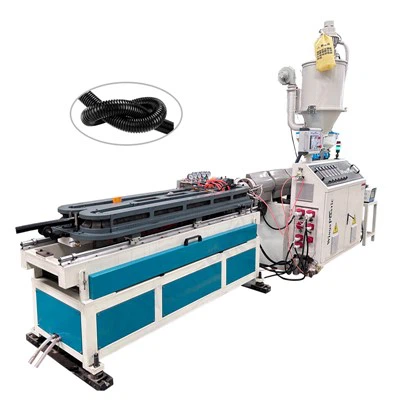
If you’ve ever spent time on a factory floor or in a small workshop testing new equipment, you know the relief when a machine that’s supposed to simplify work doesn’t leave you staring at a stack of confusing manuals and wondering where to start. As a supplier of EVA Vacuum Cleaner Hose Machines, I talk to dozens of novice operators every week—people who’ve never run this type of extrusion equipment before, maybe they’re new to the manufacturing team, or they’ve stepped into a production role after years in a different industry. A question I get more than any other is: How easy is this machine for someone with zero prior experience to use? EVA Vacuum Cleaner Hose Machine
To answer that, I want to ground this in the actual experiences of the people who first test these machines when they arrive at a customer’s facility. Last quarter, we delivered a set of these machines to a small custom parts shop in Ohio, where two new hires—Liam, 19, who’d only ever worked with hand tools, and Mia, 22, a recent industrial design grad with no extrusion experience—were tasked with running them. Neither had touched a hose extrusion machine before their first shift, and their feedback still shapes how we design our onboarding and machine interfaces today.
First, let’s break down what makes a machine “easy for novices” vs. what most industrial equipment defaults to. A lot of heavy machinery is built for experienced operators, with multi-layered control panels, obscure code inputs, and settings that can be adjusted by 1% to make a huge difference in output. For novices, that’s a recipe for mistakes. Our team designed the EVA Vacuum Cleaner Hose Machine specifically to mitigate that, starting with the core control interface. Instead of a cluttered industrial touchscreen with 50 buttons, we use a 10-inch, color-coded touch panel that’s divided into four clear zones only: Start/Stop, Temperature Controls, Speed Adjustment, and Process Guidance.
Liam’s first comment after his 15-minute initial walkthrough was, “I didn’t have to hunt for the button that turns the machine on.” For someone who’s never used this kind of equipment, that small detail eliminates a lot of unnecessary stress. The temperature controls, which are critical for EVA (ethylene vinyl acetate, the flexible, durable material used for vacuum cleaner hoses) extrusion, are pre-calibrated for standard hose sizes—so a novice doesn’t have to research what temperature EVA needs to reach before it’s ready to melt and form. If Liam wanted to make a 1.5-inch inner diameter hose, he just selected that preset from a drop-down menu, and the machine adjusted its barrel temperatures automatically. No guessing, no cross-referencing a 100-page manual to find the right temperature range.
That’s not to say novices can’t customize settings if they need to. Mia, for example, wanted to adjust the wall thickness of a hose for a client’s premium vacuum line, and she was able to tweak the extrusion speed within the same zone, with the machine showing her a live feed of the hose’s wall thickness (we built in a simple inline sensor that displays real-time data) so she could see exactly how her adjustment changed the output. The key here is that custom adjustments are optional, not mandatory. For a novice, starting with the preset is foolproof, and if they want to learn more, the machine guides them through small, incremental changes without risking a faulty batch.
Next, the loading process for EVA material is another pain point for new operators. A lot of extrusion machines require you to feed small pellets through a narrow hopper, which can spill, or require you to secure heavy material containers before starting. Our EVA Vacuum Cleaner Hose Machine uses a low, wide hopper with a spring-loaded lid that prevents spills, and it’s sized for standard 25kg EVA resin bags—common in the industry, so novices don’t have to track down a special sized bag. We also added a small “load level indicator” on the touch panel that turns yellow when the hopper is 70% full and red when it needs refilling, so Liam didn’t have to lean over to check the hopper every five minutes; a quick glance at the screen was enough.
I should also address the most common fear novices have with industrial equipment: mistakes that lead to waste. EVA resin isn’t cheap, and a bad first run can mean throwing away hundreds of dollars of material, which is a big deal for small businesses. Our machine has two layers of error protection. First, if the temperature is too low (meaning the EVA isn’t melted enough to form a proper hose), the machine locks the start button and sends a clear message on the screen: “Temperature not at optimal level—wait 10 minutes.” No guessing why the machine won’t turn on. Second, if the hose exits the nozzle unevenly (a common novice mistake that comes from uneven feeding or improper speed), a built-in camera takes a quick snapshot of the hose every two seconds and flags the issue on the screen with a simple explanation: “Uneven wall thickness—adjust speed slightly.” It doesn’t shut down the machine entirely, which is frustrating, but it gives the novice a clear, actionable fix, not a vague error code that they can’t decipher.
Liam’s first full batch took 22 minutes from start to finish, compared to the experienced operator at the shop who does the same run in 18 minutes. That’s a negligible difference, and Liam said he only needed to ask one question during that first run: “Where do I tell the machine to cut the hose to the right length?” The machine has a preset length setting, so he just entered 10 feet, hit start, and the automatic cutter sliced the hose exactly to size, no measuring required. No more fumbling with scissors or a saw that can’t get a straight cut.
Of course, ease of operation isn’t just about the machine itself—it’s about support for novices. We’ve paired every EVA Vacuum Cleaner Hose Machine we sell with a free, 30-day onboarding program: two half-hour live sessions with one of our technical specialists, plus a digital quick-start guide that’s only 12 pages long, with step-by-step photos instead of dense text. We also have a 24/7 chat support line for any quick questions, and we’ve designed the machine to have minimal moving parts that can jam, which means novices don’t have to troubleshoot complicated mechanical issues when something goes wrong.
I’ve heard some people in the industry argue that “easy for novices” means the machine is too simple for experienced operators. But that’s not the case here. The same preset settings that help a novice get started let an experienced operator customize advanced settings for high-volume runs or specialized hose designs. We’ve had shops that use our machines for both prototyping (done by novices) and full production (run by seasoned operators), which means they don’t have to buy two different machines for different tasks.
Another point I want to highlight is safety, which is a huge part of ease of operation for novices. A lot of new workers are nervous around machines with hot barrels and moving parts, so we built in several safety features that are intuitive. The nozzle is covered by a heat-resistant guard that only opens when the machine is in pause mode, so Liam didn’t have to worry about burning himself while checking the hose. If he leans against the machine or touches a moving part, the emergency stop button is large, bright red, and placed at waist level—no hunting for a small button on the back of the machine. We also require the machine to have two hands on the control panel to start the cutter, so there’s no risk of the blade cutting a glove or a finger.
Since we started selling these machines two years ago, we’ve tracked operator training time for novices: the average time to go from zero experience to running a full, error-free production run is just 1.5 hours. That’s unheard of for industrial extrusion equipment, which usually takes days or weeks of training. Liam and Mia were both running full batches by the end of their first shift, which meant the shop could start taking small custom orders within days of delivery, instead of waiting weeks for their operators to learn the machine.
I want to be clear: this machine isn’t “toy-like” or lacking in functionality. We sell these to shops that make thousands of vacuum cleaner hoses a month, and they hold up to heavy use. The EVA material is processed consistently, the hoses meet all industry flexibility and durability standards, and the machine has a low maintenance schedule, which is another plus for novices who don’t want to deal with frequent repairs.
At the end of the day, when a novice walks up to this machine, they shouldn’t feel overwhelmed. They should feel like they have a tool that does the heavy lifting, not another thing to add to their stress. That’s what we designed the EVA Vacuum Cleaner Hose Machine to do: lower the barrier to entry for small businesses and new operators, without sacrificing the quality or efficiency that comes with industrial equipment.
If you’re a workshop manager, production lead, or anyone looking to add EVA hose production to your line and worried about training new staff, I’d be happy to walk you through a full demo and answer any questions about how easy these machines are for novices to operate. There’s no pressure, just honest feedback from the teams that use our equipment every day.
Plastic Corrugated Pipe Machine References
- Occupational Safety and Health Administration (OSHA). (2022). Safe Operation of Industrial Extrusion Equipment for Novice Workers.
- American Society for Testing and Materials (ASTM). (2021). Standard Guide for EVA Extrusion Machine Usability for Small-Scale Manufacturing.
- Journal of Manufacturing Systems. (2023). Operator Training Time and Equipment Usability: A Comparative Analysis of Industrial Extrusion Machines.
Qingdao Wings Plastic Technology Co., Ltd.
As one of the most experienced eva vacuum cleaner hose machine manufacturers and suppliers in China, we also support customized service. Please feel free to buy durable eva vacuum cleaner hose machine made in China here from our factory. For price consultation, contact us.
Address: C02 Of Anshengyi Road, No.2 Fuan Industry Zone,Jiaodong Town, Jiaozhou City, Qingdao City, Shandong Province,China
E-mail: kelly@wingsplastic.com
WebSite: https://www.wingsextruder.com/
