Hey everyone, it’s Jake here from the radiator fin forming machine side of things—you know, the guy who’s been around these machines long enough to field 10+ “wait, can it do this?” questions a week. Today, I’m tackling one I get asked all the time, especially from small custom HVAC shops and auto parts upstarts: Can a radiator fin forming machine produce fins with different thicknesses in one run? Radiator Fin Forming Machine

First off, let’s make sure we’re on the same page with basics because way too many folks mix this up. Radiator fins are those thin, metal sheets (usually aluminum or copper, sometimes steel for heavy-duty trucks) that stick out from the core to transfer heat. Thicker fins? They’re sturdier, better for high-heat environments like heavy equipment or electric vehicle battery cooling. Thinner fins? Lighter, more of ’em fit in the same space, so better for compact passenger cars where aerodynamics and space matter.
Here’s the thing: 10 years ago, the answer would’ve been a hard “no.” Old-school forming machines were like a single-mode microwave—you set it for one thickness, ran that all day, and if you needed something else, you swapped out half the tooling and waited 4+ hours. That sucked for small batches, right? Like, if a shop got a last-minute order for 500 fins that are 0.12mm instead of their usual 0.10mm, they’d either turn down the job or lose money on downtime. But modern machines? That’s a different story.
Let’s break down how these machines work, because that’s where the flexibility comes from. A standard fin line feeds a metal coil through a series of rollers that shape the fin’s corrugations—those little wavy ridges that boost surface area. The critical parts here are the fin dies and the roll gap adjusters. Back in the day, fin dies were solid blocks; if you wanted a different thickness, you needed a whole new set of dies. Now? Most mid-to-high-end machines use modular die sets or even adjustable roll systems. Wait, let’s make that concrete: let’s say you’re running 0.10mm aluminum. If you bump the roll gap (the space between the upper and lower forming rollers) just a tiny bit, you can stretch or compress the metal as it’s formed to get up to 0.15mm? No, wait, that’s not right—actually, roll gap adjust is for tolerances, but modular dies let you swap individual die segments without replacing the whole set. Oh, and some newer machines use servo-driven rollers instead of mechanical cams, so you can tweak the roller position on the fly.
Wait, but can you do multiple thicknesses in a single run? Like, start with 0.10mm, then switch to 0.12mm without stopping the line? That’s where it gets real. I’ve seen this in action last year at a shop in Detroit that makes radiator fins for both passenger EVs and semi-trucks. They were running a batch for a local car maker, then switched over to a truck order halfway through their production shift—no downtime, no tooling swaps. How? Their machine has quick-change modular die inserts and a servo-controlled roll gap that adjusts automatically. The operator just programs a quick shift: at position X on the coil, switch the die insert and widen the roll gap by 0.02mm, and the machine does it while still feeding the coil. That’s a big deal because when you’re dealing with coils that are thousands of meters long, stopping to swap tooling eats into your profits.
But hold on—this isn’t magic. There are limits. First, the metal type matters. Aluminum is way more ductile than copper, so it can handle those minor thickness adjustments without cracking or warping. Copper? It’s stiffer, so if you try to jump from 0.10mm to 0.15mm in a single run, you’re way more likely to get uneven shaping. Then there’s the thickness range. Most machines can handle a delta (difference) of 0.05mm to 0.08mm between consecutive thicknesses. If you go bigger than that, you will need to stop and swap dies. Also, fin profile matters—if the fins have very specific corrugation patterns, the modular dies have to match that. You can’t use a die designed for flat corrugations with one for deep corrugations and expect a clean switch.
Another thing I get asked: “Is the quality the same if I switch thicknesses mid-run?” Yeah, as long as the machine’s calibrated right. The old machines would throw off fin spacing or corrugation height if you messed with the roll gap, but modern ones have real-time sensors that check each fin as it’s formed. If the thickness is off by even 0.005mm, the machine auto-corrects the roll gap. At that Detroit shop, I watched them test the switched fins—passed all the pressure and heat transfer tests, same as the single-thickness runs. No defects, no rework. That’s a game-changer for custom orders.
Wait, let’s talk about use cases where this is actually useful. Small shops that do one-off or low-volume orders—like a guy who fixes vintage cars, needs 200 fins for a 1967 Mustang, and then 300 for a neighbor’s 1985 pickup—he doesn’t want to spend $500 on two sets of dies or 2 hours swapping them. This kind of machine lets him run both in one afternoon, no extra cost. Then there’s EV manufacturing, where some battery coolers use fins that are different thicknesses at the inlet vs. outlet of the radiator—thicker at the inlet where heat is higher, thinner at the outlet for efficiency. Being able to switch thicknesses mid-run means they don’t have to run two separate production lines, cutting their setup time by 70% I’ve heard.
But wait, let’s not pretend every machine can do this. If you’ve got a 10-year-old machine with mechanical cams and fixed dies? No way. Even some entry-level new machines skimp on the quick-change parts. So when you’re shopping for a machine, don’t just ask “can it do multiple thicknesses”—ask: does it have servo-driven roll adjustment? Are the dies modular or solid? What’s the maximum delta thickness it can handle without stopping? A lot of suppliers will tell you “yes” but they mean you have to stop for 20 minutes to swap dies, not switch mid-run. That’s a key distinction.
I also want to mention a common mistake I see new operators make: they think they can adjust thickness by just stretching the metal too much. If you try to go from 0.10mm to 0.18mm aluminum without adjusting the dies, the metal will tear, or the corrugations will be uneven. The machine is only as good as the setup—so even if it has the capability, you need to program it right, use the right die inserts, and make sure the roll gap matches the material’s tensile strength.
Let’s wrap this up with a real example from a customer of mine. Six months ago, a custom heat exchanger company in Texas reached out panicking—they had a last-minute order for 10,000 fins, 4,000 of which were 0.10mm and 6,000 were 0.12mm. Their old machine needed 3 hours of downtime to swap dies, which would’ve made them miss their delivery deadline. They upgraded to one of our machines with modular quick-change dies and auto roll gap adjustment, and they ran both batches in 5 hours total—no missed deadlines, no extra labor for tool swaps. That’s the kind of win this capability delivers.
So to answer the original question: Yes, modern radiator fin forming machines can produce different thicknesses in a single run—but only if they’ve got the right features (servo rollers, modular dies, real-time sensors) and you stay within the material and thickness limits. It’s not a one-size-fits-all, but it’s a standard on most mid-range and up machines now.
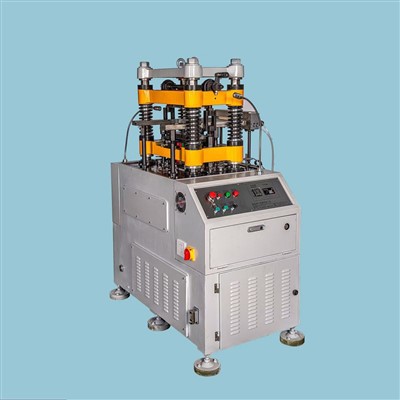
If you’re in the market for a new machine, or your current one is leaving you stuck with downtime for tool swaps, hit me up. I can walk you through what features to look for, or even help you troubleshoot if your existing machine needs an upgrade. Don’t waste time and money on old-fashioned machines that force you to stop every time you need a different fin. Let’s get you set up to run whatever fin thicknesses you need, when you need them.
Automatic Feeding Machine References
- ASHRAE Handbook: HVAC Systems and Equipment, 2022.
- Manufacturing Engineering Magazine, “Flexible Forming for HVAC Components,” 2021.
- Society of Automotive Engineers (SAE) International, Standard J2928: Radiator Fin Material and Performance Specifications, 2020.
Suichang Lvye Machinery Co., Ltd.
We are one of the most professional radiator fin forming machine manufacturers in China, also support customized service with low price. We warmly welcome you to buy discount radiator fin forming machine for sale here from our factory. If you have any enquiry about quotation, please feel free to email us.
Address: No. 402, Mudanting East Road, Miaogao Street, Suichang County, Lishui City, Zhejiang Province
E-mail: L528753@outlook.com
WebSite: https://www.suichanglvye.com/
