If you’ve ever walked a construction site, driven over a bridge, or held a load-bearing component of a machine, you’ve likely interacted with carbon steel bars—often called rebar, but in our industry, we just refer to them as carbon steel bars. For decades, these bars have been the unsung backbone of global infrastructure, and as a supplier who’s worked with them for 18 years, I’ve noticed a lot of questions from engineers, contractors, and even small business owners who want to understand exactly what makes up this ubiquitous material. It’s not just iron and carbon, despite the oversimplified explanations you’ll see in casual textbooks. The composition of carbon steel bars is a carefully balanced blend of elements, each serving a specific purpose to make the bar strong, durable, and workable for its intended use. Carbon Steel Bar

Let’s start with the base element: iron. Iron makes up about 98% of the typical carbon steel bar, by weight. It’s a naturally abundant metal that forms the structural foundation of all steel products, including our carbon steel bars. But pure iron is soft and prone to bending or breaking under heavy load—so we add other elements to tailor its properties. The most critical of these, and the one that gives carbon steel its name, is carbon. Carbon is non-metallic, and when mixed with molten iron, it bonds with iron atoms to form a crystalline structure that boosts strength and hardness. For standard carbon steel bars used in general construction, the carbon content sits between 0.05% and 0.25% by weight. Wait, you might be thinking: if more carbon makes steel stronger, why not add more? Because too much carbon makes the bar brittle—brittle enough to snap under tension rather than bend gradually, which is a death sentence for structural applications. Imagine a highway overpass that suddenly cracks instead of flexing during heavy traffic; that’s why we keep carbon levels in check for our grade 40 and grade 60 bars, the most common products we supply for roads, residential foundations, and commercial building frames.
Next on the list is manganese, an element we add in small quantities (0.6% to 1.5% for standard carbon steel bars) for two key reasons. First, manganese acts as a deoxidizer and desulfurizer during the manufacturing process. When we melt iron and other elements, small amounts of oxygen and sulfur can get trapped, which create weak points in the final bar. Manganese reacts with these impurities to form harmless compounds that we can remove or leave as tiny, non-damaging particles. Second, manganese enhances the strength and hardness of the bar without making it overly brittle—something pure carbon can’t do alone. For our high-strength carbon steel bars, used in heavy industrial structures like factory warehouses and bridge supports, we adjust manganese levels slightly to hit a perfect balance of tensile strength and ductility, meaning the bar can stretch just enough to absorb stress before yielding.
Now, let’s talk about the impurities that we intentionally keep at minimum levels. Phosphorus, for example, is a natural element found in iron ore, but we limit it to less than 0.05% in our carbon steel bars. Too much phosphorus makes steel cold-short, which means it becomes brittle when cooled—so if you’re working with bars in winter, excessive phosphorus could lead to cracks during installation. Sulfur is another impurity we strictly control, capping it at 0.05% for most of our products. High sulfur content makes steel hot-short, which means it breaks easily when heated during welding or bending. Since nearly all our carbon steel bars require welding to connect sections on-site, this control is non-negotiable for us—welds are only as strong as the base metal, so we never cut corners on sulfur levels.
In some specialty carbon steel bars we supply, we add small amounts of other elements to meet specific project needs. For example, for coastal construction sites—where saltwater exposure would corrode standard bars too quickly—we add trace amounts of copper (less than 0.4%) to boost corrosion resistance. Copper forms a thin, protective patina on the bar’s surface that slows down rust, extending the life of the bar by decades in harsh marine environments. We also add niobium or vanadium to our high-grade carbon steel bars for large-scale infrastructure projects like dams or skyscrapers. These elements refine the crystal structure of the steel, making it stronger and more uniform, which means we can produce thinner bars that still meet the same structural requirements—saving on material costs and reducing the load on a building’s foundation.
Wait, you might be wondering how this composition translates to real-world performance. Let’s use a recent project we supplied for a residential housing development in Ohio. The contractor ordered 500 tons of grade 60 carbon steel bars, which have a carbon content of 0.23% and manganese of 0.95%. The bars were used in the foundation and floor slabs, which need to handle the weight of multi-unit buildings and resist shifting soil. When we tested a sample of that batch, the tensile strength came out to 60,000 psi—exactly what the contractor specified. If we had added too much carbon, that number would be higher, but the bar would have been too brittle to bend into the curved shapes needed for the foundation’s footings. If we had too little carbon, the bar would have bent under the weight of the concrete, leading to costly structural issues down the line.
I’ve seen firsthand what happens when the composition of carbon steel bars is off. Early in my career, before I joined this industry, I worked on a small commercial project where the contractor used cheap, untested bars from a supplier that cut corners on manganese. The bars were soft, so when workers bent them on-site, they didn’t snap—but they deformed under the weight of the building a year later. We had to replace every bar at a cost that was three times the original supply budget. That’s why, for every batch we produce, we run three separate elemental tests: one during melting to check the base iron and carbon levels, one after adding alloy elements to verify manganese and any trace additives, and a final test on the finished bars to confirm no impurities exceeded our limits. It’s a step that adds a small amount of time to production, but it’s the reason our clients come back to us, time and time again, for consistent, reliable carbon steel bars.
Another common misconception I encounter is that all carbon steel bars are the same. In reality, the composition varies by grade, and each grade is designed for a specific use. Grade 40 bars, which have a lower carbon content (around 0.20%), are softer and more ductile, making them ideal for small residential projects where they need to be bent easily and don’t face extreme loads. Grade 60 bars, which we touched on earlier, have higher carbon and manganese levels, making them stronger for mid-rise buildings and road projects. We also supply grade 75 bars, which are used in heavy infrastructure, with a carbon content up to 0.25% and carefully balanced alloy elements to handle massive loads like bridge girders. The composition differences between these grades aren’t arbitrary—they’re tailored to the stress the bar will encounter in its intended application.
I also want to address how manufacturing processes interact with composition, because it’s not just about what elements we add, but how we process them. When we roll molten carbon steel into bar shape, we heat it to specific temperatures that refine the grain structure, which amplifies the properties we built into the composition. For example, a bar with 0.22% carbon will have different strength if it’s hot-rolled versus cold-worked. Our hot-rolling process, which is the standard for most construction bars, aligns the crystalline structure along the length of the bar, increasing its tensile strength. We never use cold-worked bars for structural projects, because while they’re hard, they’re also brittle, which is a risk we won’t take for our clients.
If you’re a contractor, engineer, or project manager reading this, you probably care about two things: how the composition of carbon steel bars affects your project’s safety and how to choose the right bar for your needs. For residential foundations, go for grade 40 bars if you’re on a tight budget—they’re reliable and easy to install. For mid-rise buildings or highways, grade 60 is the sweet spot of strength and workability. For coastal or high-corrosion areas, look for bars with added copper, or consider our epoxy-coated carbon steel bars if copper alone isn’t enough. Our team can help you test the specifications of your project and recommend the exact composition of carbon steel bars that will meet your load requirements, budget, and environmental conditions.
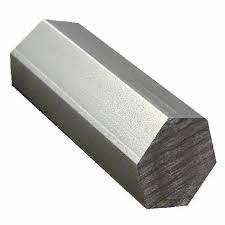
At the end of the day, carbon steel bars are more than just a raw material—they’re the foundation of the world we build. Every bridge, every home, every factory starts with a bar that’s been carefully blended and tested to do its job. If you’re planning a project and need reliable, precision-made carbon steel bars, don’t hesitate to reach out to our team to discuss your requirements. We’ve been in this industry for decades, and we know exactly how to tailor the composition of our bars to fit your needs, no matter how big or small the project. Together, we can ensure your structure stands strong for years to come.
Stainless Steel Plate References
- ASM International. (2019). Properties and Selection: Irons, Steels, and High-Performance Alloys. ASM Handbook, Volume 1.
- National Institute of Standards and Technology. (2021). Carbon Steel Composition and Mechanical Properties for Structural Applications.
- World Steel Association. (2020). Steel Composition Fundamentals for Construction and Infrastructure.
Shanxi Midas Industrial Co., Ltd.
We’re known as one of the most professional carbon steel bar manufacturers and suppliers in China. With abundant experience, we warmly welcome you to buy cheap carbon steel bar made in China here from our factory. For price consultation, contact us.
Address: 28th, Huanqiu Jinrong Zhongxin, Xieyuan Road, Changfeng Business District, Taiyuan City, Shanxi Province, China
E-mail: midassteel@163.com
WebSite: https://www.midassteel.com/
