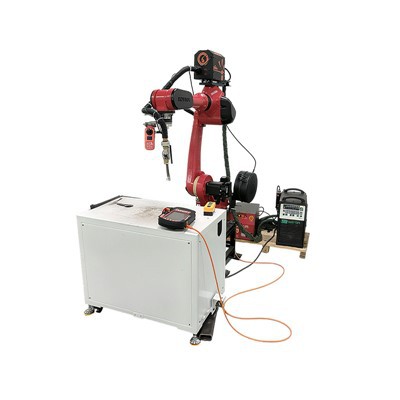
As a seasoned supplier of stamping robots, I’ve witnessed firsthand the transformative impact these machines have on the aerospace industry. Stamping, a critical manufacturing process, involves shaping metal sheets into desired forms using presses and dies. In the aerospace sector, where precision and reliability are non – negotiable, stamping robots play a pivotal role in meeting the stringent specifications required for aircraft components. Stamping Robot
Precision and Tolerance
One of the most crucial stamping specifications in the aerospace industry is precision. Aerospace components, such as wing panels, fuselage parts, and engine components, must be manufactured with extremely tight tolerances. These tolerances often range from a few thousandths of an inch to micrometer – level accuracy. Stamping robots equipped with advanced servo – controlled systems can achieve this high level of precision.
Our stamping robots utilize high – resolution sensors and sophisticated control algorithms to ensure consistent and accurate stamping operations. For example, the positioning accuracy of our robots can be within ±0.1 mm, which is essential for components that need to fit together seamlessly during aircraft assembly. The repeatability of the stamping process is also a key factor. Our robots can maintain a repeatability of up to ±0.05 mm, ensuring that each stamped part meets the exact same specifications as the previous one.
Material Compatibility
The aerospace industry uses a wide variety of materials, each with its own unique properties and stamping requirements. Common materials include aluminum alloys, titanium alloys, and high – strength steels. These materials are chosen for their high strength – to – weight ratio, corrosion resistance, and other performance characteristics.
Stamping robots need to be able to handle these different materials effectively. For aluminum alloys, which are relatively soft and ductile, our robots can apply the right amount of force to form the parts without causing cracking or tearing. The stamping speed and the pressure profile can be precisely adjusted according to the specific alloy and thickness of the aluminum sheet.
Titanium alloys, on the other hand, are much stronger and more difficult to form. They require higher stamping forces and slower speeds to avoid material damage. Our stamping robots are designed with powerful actuators and advanced control systems that can adapt to the unique properties of titanium alloys. They can apply consistent pressure throughout the stamping process, ensuring that the titanium parts are formed accurately without any internal defects.
High – strength steels are also widely used in aerospace applications. These steels have excellent tensile strength but are more brittle than aluminum and titanium alloys. Our stamping robots are equipped with special dies and forming techniques to handle high – strength steels. The robots can control the deformation rate and the stress distribution during stamping to prevent cracking and ensure the integrity of the stamped parts.
Complex Geometries
Aerospace components often have complex geometries that require advanced stamping techniques. For example, some wing panels may have curved surfaces, while engine components may have intricate internal structures. Stamping robots are capable of achieving these complex geometries through multi – stage stamping processes.
Our stamping robots can be programmed to perform multiple stamping operations in sequence, gradually shaping the metal sheet into the desired form. The robots can also use techniques such as deep drawing, embossing, and coining to create the required features. For instance, in the case of a curved wing panel, the stamping robot can first perform a pre – forming operation to create the basic shape, and then use a series of secondary operations to refine the curvature and add any necessary details.
The ability to handle complex geometries also requires the use of advanced die designs. Our engineering team works closely with aerospace manufacturers to develop custom – designed dies that are optimized for the specific stamping requirements of each component. These dies are made from high – quality materials and are precision – machined to ensure accurate forming of the metal sheets.
Surface Quality
Surface quality is another important stamping specification in the aerospace industry. The surfaces of aerospace components need to be smooth and free of defects, such as scratches, dents, and burrs. These defects can not only affect the appearance of the components but also their performance and durability.
Our stamping robots are designed to minimize surface damage during the stamping process. They use advanced die coatings and lubrication systems to reduce friction between the die and the metal sheet, which helps to prevent scratches and improve the surface finish. The robots also have strict process control measures in place to ensure that the stamping operations are carried out smoothly without any sudden impacts or vibrations that could cause surface defects.
In addition, our stamping robots can be integrated with automated inspection systems to detect and reject any parts with surface defects. These inspection systems use technologies such as vision sensors and laser scanners to examine the surface quality of the stamped parts in real – time. If any defects are detected, the parts can be automatically removed from the production line, ensuring that only high – quality components are delivered to the aerospace manufacturers.
Productivity and Efficiency
In the highly competitive aerospace industry, productivity and efficiency are crucial for meeting production deadlines and reducing costs. Stamping robots offer significant advantages in this regard. They can operate continuously for long periods of time, with minimal downtime for maintenance and repairs.
Our stamping robots are designed with high – speed actuators and optimized motion control algorithms to achieve fast stamping cycles. The robots can perform multiple stamping operations per minute, depending on the complexity of the component. For example, in the production of small – to – medium – sized aerospace parts, our robots can achieve a stamping speed of up to 60 strokes per minute.
In addition, our stamping robots can be easily integrated into automated production lines. They can work in conjunction with other equipment, such as material handling systems and inspection stations, to create a seamless production process. This integration not only increases productivity but also reduces the need for manual labor, which can lead to significant cost savings for aerospace manufacturers.
Safety
Safety is of utmost importance in the aerospace manufacturing environment. Stamping robots are designed with multiple safety features to protect operators and prevent accidents. Our stamping robots are equipped with safety光幕, safety fences, and emergency stop buttons to ensure that the stamping operations are carried out in a safe manner.
The robots also have advanced collision detection systems that can sense any unexpected contact with objects or operators. In the event of a collision, the robots can immediately stop their operations to prevent damage to the equipment and injury to personnel. In addition, our stamping robots are programmed with safety protocols that comply with international safety standards, such as ISO 10218 and ANSI/RIA R15.06.
Conclusion
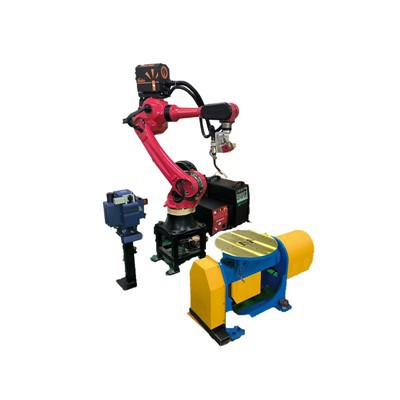
In conclusion, stamping robots can achieve a wide range of stamping specifications in the aerospace industry. From precision and material compatibility to complex geometries and surface quality, these robots offer the reliability and performance needed to meet the strict requirements of aerospace manufacturing. Our company, as a leading stamping robot supplier, is committed to providing state – of – the – art stamping robots and comprehensive solutions to the aerospace industry.
Palletizing/Depalletizing Robot If you are an aerospace manufacturer looking for high – quality stamping robots to improve your production processes and meet your stamping specifications, we invite you to contact us for a detailed discussion. Our team of experts will be happy to assist you in finding the right stamping robot solution for your specific needs.
References
- Metal Forming Handbook by ASM International
- Aerospace Manufacturing Technology by Elsevier
- Robotics for Manufacturing: Fundamental Concepts and Applications by John Wiley & Sons
Dongguan Chuanglida Intelligent Equipments Co., Ltd.
As one of the most professional stamping robot manufacturers and suppliers in China, we also support customized service. Please feel free to buy discount stamping robot in stock here from our factory. For price consultation, contact us.
Address: Room 201, Building 2, No. 61, Shachang 1st Road, Dalang Town, Dongguan City, Guangdong Province
E-mail: haoguangli001@outlook.com
WebSite: https://www.boruntestech.com/
