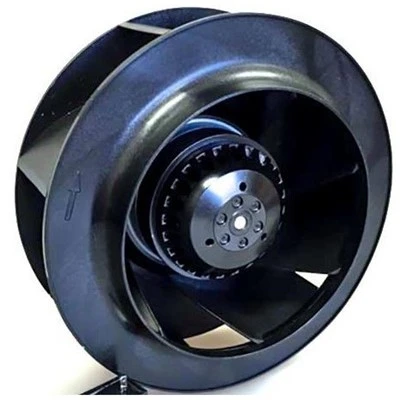
As a supplier of EC centrifugal fans, I often encounter customers who have questions about how to change the air flow direction of an EC centrifugal fan. This is a crucial aspect as the appropriate air – flow direction can significantly affect the fan’s performance in various applications, such as ventilation systems in commercial buildings, cooling in industrial equipment, and air circulation in indoor environments. In this blog post, I’m going to share some comprehensive insights and practical methods on changing the air – flow direction of an EC centrifugal fan. EC Centrifugal Fan
Understanding the Basics of EC Centrifugal Fans
Before delving into how to change the air – flow direction, it’s essential to understand how an EC centrifugal fan works. An EC (Electronically Commutated) centrifugal fan is a type of fan that uses an electronically commutated motor. This motor type offers high efficiency, precise speed control, and quiet operation compared to traditional AC motors.
Centrifugal fans operate by converting the rotational energy of the impeller into kinetic energy and then into static pressure. The air enters the fan axially through the intake, is then caught by the rotating impeller blades, and is expelled radially at the outlet. The basic design consists of an inlet, an impeller, a housing, and an outlet. The shape and orientation of these components play a significant role in determining the air – flow direction.
Reasons for Changing the Air – Flow Direction
There are several reasons why one might need to change the air – flow direction of an EC centrifugal fan. In some cases, it could be due to a change in the application requirements. For example, if a ventilation system was initially designed for exhaust air but now needs to be used for intake air, changing the air – flow direction becomes necessary.
Another reason could be related to the layout of the space where the fan is installed. Sometimes, the initial installation might not have allowed for an optimal air – flow direction, and re – directing the air can improve the overall air distribution and reduce hot or cold spots in the room.
Methods to Change the Air – Flow Direction
1. Motor Reversal
One of the most effective ways to change the air – flow direction of an EC centrifugal fan is by reversing the rotation of the motor. Since the air flow in a centrifugal fan is directly related to the impeller’s rotation, reversing the motor’s rotation will reverse the air – flow direction.
For EC motors, this can often be achieved through the motor’s control system. Many modern EC motors come with built – in control features that allow for easy reversal of rotation. Usually, this involves adjusting the electrical signals that control the motor’s commutation. For instance, by changing the sequence of the voltage pulses sent to the motor windings, the direction of the magnetic field can be reversed, which in turn reverses the motor’s rotation.
However, it’s important to note that not all EC motors support rotation reversal. Before attempting to reverse the motor, you should consult the fan’s technical documentation or the manufacturer. If the motor is not designed for reversal, forcing it to reverse might cause damage to the motor and reduce its lifespan.
2. Mechanical Modification of the Fan Housing
In some cases, especially when the motor does not support rotation reversal or when a more permanent change is required, mechanical modification of the fan housing can be considered. This method involves physically re – arranging or modifying the inlet and outlet of the fan.
If the fan housing has a modular design, it might be possible to remove and re – install components in a different orientation. For example, some fan housings have removable panels or duct connections that can be re – positioned. By changing the position of the inlet and outlet, the path of the air through the fan can be altered, effectively changing the air – flow direction.
Another approach is to cut and re – weld or re – fasten parts of the fan housing. This method requires more advanced skills and tools, such as a welder and cutting equipment. It should only be attempted by experienced technicians. Additionally, any mechanical modification must be carried out carefully to ensure the structural integrity of the fan housing and to prevent air leaks.
3. Using Air Ducts and Dampers
Air ducts and dampers can also be used to change the apparent air – flow direction without actually changing the fan’s internal operation. Dampers are adjustable valves that can be used to control the flow of air in a duct system. By opening and closing different dampers, the air can be redirected to different parts of the duct system.
For example, in a multi – zone ventilation system, dampers can be adjusted to direct the air from a single fan to different rooms. By closing off one path and opening another, the air can be made to flow in a different direction. Similarly, the layout of the air ducts can be modified to change the overall air – flow pattern. Installing elbows, branches, and reducers in the duct system can change the direction and distribution of the air coming from the fan.
Considerations When Changing the Air – Flow Direction
1. Performance Affect
Changing the air – flow direction can have an impact on the fan’s performance. For example, if the fan was originally designed to operate in a specific air – flow direction, changing it might alter the fan’s efficiency, pressure – flow characteristics, and noise level.
When the air – flow direction is reversed, the impeller might encounter different aerodynamic forces, which could lead to reduced efficiency. Additionally, the pressure – flow curve of the fan might change, which means that the fan might not be able to provide the same amount of air volume or static pressure as before. Therefore, it’s important to re – evaluate the fan’s performance after changing the air – flow direction and make any necessary adjustments to the system.
2. Safety
Safety is always a top priority when working with fans. Whether you are reversing the motor, making mechanical modifications, or adjusting air ducts and dampers, you should ensure that the power is disconnected from the fan. This will prevent accidental startup, which could cause serious injury.
If you are making mechanical modifications, such as cutting or welding the fan housing, you should wear appropriate protective gear, including safety glasses, gloves, and a welding mask (if applicable). Additionally, any modifications should comply with relevant safety standards and regulations.
3. Compatibility
When using air ducts and dampers to change the air – flow direction, it’s important to ensure that the ductwork and dampers are compatible with the fan. The size, shape, and material of the ducts and dampers can affect the fan’s performance. For example, if the ducts are too small, they can cause excessive pressure drop, reducing the fan’s efficiency. If the dampers are not properly sealed, they can cause air leaks, which can also affect the system’s performance.
Guidance for Purchasing and Further Consultation
If you are in the process of selecting an EC centrifugal fan and need a fan with easily changeable air – flow direction, our company offers a range of high – quality EC centrifugal fans that are designed with flexibility in mind. Some of our models come with motors that support easy rotation reversal, while others have modular fan housings for convenient mechanical modification.
If you have any questions about changing the air – flow direction of an EC centrifugal fan, or if you need assistance in selecting the right fan for your application, our team of experts is here to help. We can provide detailed technical advice, perform system evaluations, and ensure that you get the most suitable fan for your needs.
Custom Cooling Fan Don’t hesitate to reach out to us for further discussion and purchase consultation. We are committed to providing you with the best solutions and excellent customer service.
References
- ASHRAE Handbook: HVAC Systems and Equipment. This handbook provides comprehensive information on fan design, operation, and performance, including how to change air – flow directions in various applications.
- Motor and Fan Manufacturers’ Technical Documents. These documents offer in – depth guidance on the specific features and requirements of different EC motors and centrifugal fans, which are valuable for understanding the air – flow direction change process.
Dongguan Shengzhirong Electronics Co., Ltd.
As one of the most professional ec centrifugal fan manufacturers and suppliers in China, our products have good reputation in the market. Please rest assured to wholesale high quality ec centrifugal fan made in China here from our factory. Customized orders are welcome.
Address: 6/F, Building 2, No.68, Shunxing 2nd Road, Dajingtou 2nd Industrial Zone, Dalang Town, Dongguan City, Guangdong, China
E-mail: szr_coolingfan@163.com
WebSite: https://www.szrfan.com/
