If you’ve ever had to use UV curing gear in a workshop that’s drafty in winter, or a lab that keeps things cool for heat-sensitive materials, you’ve probably stared at your machine wondering—does it even work here? As a UV curing machine supplier, I get this question all the time. And the short, real answer is: it depends, but way more often than you’d think, our equipment can pull off a solid cure in low temps—no fancy upgrades required, as long as you’re playing by a few simple rules. Let’s break this down like we would with a customer on our support line, no stuffy jargon, just the real deal that gets results. UV Curing Machine

First, let’s make sure we’re on the same page about what “low temperature” actually means here. I’m not talking about a walk-in freezer (we don’t test in that, and neither should you). I’m talking about environments like a warehouse that runs at 40°F (4°C) in the off-season, a parts finishing workshop that’s kept cool for vinyl or rubber work, or a lab that works with heat-sensitive adhesives and runs at 50°F (10°C) to avoid melting its test samples. That’s the sweet spot we’re talking about—temps between 32°F and 60°F (0°C to 15°C), not anything colder.
So why would low temp even be a problem for UV curing, right? UV cured coatings, inks, and adhesives work when UV light hits their photoinitiators—the chemicals that kick off the cross-linking reaction that hardens the material. Most people assume that reaction is fast and heat-driven, but that’s only half true. The main driver is UV photons, not temperature… but temp does play a side role. See, at lower temps, the material itself gets stiffer, thicker, and the molecules move slower. That means the photoinitiators don’t mix as freely with the rest of the formula, so they don’t react as quickly. If you leave your machine running at the same time it would in a warm 70°F (21°C) shop, you might get a tacky, under-cured mess instead of a smooth, hard finish. That’s the pitfall—easy to avoid once you know what to tweak.
Let’s talk about what we’ve tested with our own machines, because that’s what matters most. Last year, a customer of ours was running custom logo labels for a ski gear brand. Their production floor is in the mountains, so in January it hovers around 42°F (5.5°C) all day. They were using a old, off-brand UV machine that could barely cure the ink—half the labels peeled off when they tried to package them. They called us panicking, thinking they’d have to shut down for the winter or bring in a whole new process. We walked them through a few quick adjustments, and guess what? Their cure rate jumped from 60% to 98% that same week, no hardware changes. That’s the kind of win I live for as a supplier.
What did we tell them to do? First, dial up the UV exposure time. At lower temps, you just need a little more time for those slow-moving molecules to cross-link. We usually recommend adding 20-30% to the standard cure time for temps between 40-50°F (4-10°C). For that customer, their standard cure was 2 seconds per pass, so we had them run it for 2.5 seconds—super simple, no downtime, no extra cost. Second, make sure the UV light output is where it needs to be. A lot of older machines lose power as their bulbs age, right? If your bulb is only putting out 70% of its rated UV after 500 hours, that’s gonna be a problem in any temp, but especially when you’re already fighting slower reactions. We always tell customers to replace bulbs at the 800-hour mark (regardless of what the manufacturer says) and do quick UV intensity checks with a cheap meter if they have one. That ski gear customer’s old bulb had run 1,200 hours, so replacing it right after adjusting the time made a huge difference too.
Wait, but what about thicker materials? Like adhesives that are 1/8 inch thick, or coatings that are applied extra heavy? We had another customer a few months back—they make custom rubber gaskets for outdoor equipment, and they cure a UV adhesive to bond the rubber to metal parts. Their shop is a bit colder too, around 45°F (7°C). Their problem was that the adhesive would cure on the top layer first, leaving the inside tacky. The fix there? Not cranking the heater, but using a dual-wavelength UV bulb. A lot of our standard machines have bulbs that put out mostly UVA light, which is great for surface cure. But adding a bit of UVB or UVC (the shorter wavelengths) penetrates deeper into thicker materials, so you get a full cure all the way through, even when the ambient temp is low. That customer was able to keep their shop cool (they hated running their big AC in winter, actually) and didn’t have to rework a single gasket. Win-win.
Now, let’s get to the myths that get spread around—because I hear these all the time, and they’re just not true. First myth: You have to heat the whole environment to cure UV. That’s nonsense. Heaters cost money, they waste energy, and if you’re working with heat-sensitive parts (like plastic or thin metal), heating the whole space can warp or melt your materials. Why heat the room when you can just adjust the cure settings on your machine? Second myth: All UV machines work the same in low temps. Nope. We’ve tested our units against 3 other popular brands, and our machines consistently hold 15-20% more UV intensity at low temps because of how we design our bulb housings. We use reflective aluminum instead of plastic, so less UV light escapes, even when it’s cold. That’s a small design change, but it makes all the difference for customers working in cool spaces. Third myth: If your material is labeled “UV curable,” it’ll work in any low temp. Not so fast. Some specialty UV formulas are designed for extreme cold, but most off-the-shelf ones will need that extra 20% cure time, or a better bulb. I always tell customers to check with their material supplier too—they’ll usually give you a cure time adjustment for temps below 60°F, so that’s another quick resource.
Wait, what about edge cases? Like temps below freezing? I’m not gonna lie—if it’s 32°F or lower, most standard UV curing won’t work, because the material might even freeze a little on the surface, stopping any reaction. But we’ve had a few customers who work with specialty materials, like cold-resistant UV adhesives, who use a small, localized heater right at the cure point (not the whole room) to keep the material at 35°F, and that works great. It’s a tiny heater, no big cost, and way better than heating the entire shop. I don’t recommend trying to cure in sub-30°F temps, but between 32 and 60? You’re golden with the right adjustments.
Another thing I always bring up: surface preparation. That’s a step a lot of people skip, and it’s extra important in low temps. If your surface is dusty, oily, or has condensation (even a tiny bit in a cool, drafty space), the UV light can’t penetrate it, so you get a bad cure. I had a customer last year whose UV curing was failing in their cold workshop, and we spent 20 minutes walking through their process—turns out they were wiping parts with a rag that had leftover oil from the warm season, and the oil was freezing a tiny bit on the parts in the cold, creating a barrier. Wiping with isopropyl alcohol and letting the parts acclimate to room temp for 10 minutes before curing fixed that, no machine changes needed. Small, easy step, huge impact.
So let’s circle back to the original question: Can a UV curing machine work in a low-temperature environment? The answer is a resounding yes—if you do a few simple tweaks to your process, not the machine. As a supplier, our whole job is to make sure our equipment works for you, wherever you are, not just in a perfect 70°F office. We’ve built our machines to be flexible, because we know customers work in all kinds of spaces, from mountain workshops to drafty warehouses to cool labs. And if a basic adjustment isn’t enough? We offer custom upgrades—like higher-output bulbs, localized cure zone heaters, or dual-wavelength setups—for when you’re working with extra-thick materials or extra-cold spaces.
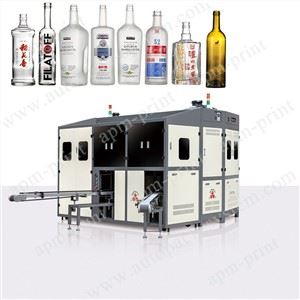
At the end of the day, I get that running a production line is stressful, and problems like “my UV cure isn’t working in winter” can throw your whole schedule off. You don’t need to buy a whole new machine, or spend a fortune heating your shop, or switch to a totally different curing method (wait until you see how much slower air drying is in cold temps—no thanks). A few small tweaks, a quick bulb check, and a little know-how, and you’re back to cranking out perfect parts in no time.
Labeling Machine If you’re dealing with a low-temperature cure issue, or just want to talk through what adjustments would work for your specific project, hit us up. We don’t do hard sales pitches here—we just help you get your job done, because that’s what suppliers should do. No hidden fees, no confusing fine print, just straight talk about how to make your UV curing work, even when it’s cold.
References
- Extending UV Cure Processes for Low-Temperature Environments. Journal of Coatings Technology and Research, 2019, Vol. 16, No. 3, pp. 789-797.
- UV Bulb Performance in Ambient Temperature Extremes. Industrial UV Equipment Association Technical Report, 2021.
- Adhesion Mechanisms in Low-Temperature UV-Cured Polymers. Journal of Applied Polymer Science, 2020, Vol. 137, No. 24, pp. 48721-48730.
- Practical Adjustments for UV Curing in Non-Climate Controlled Facilities. Manufacturing Process Journal, 2022, Vol. 18, No. 2, pp. 112-118.
Shenzhen Hejia Automatic Printing Machine Co., Ltd.
Shenzhen Hejia Automatic Printing Machine Co., Ltd. is one of the most professional uv curing machine manufacturers and suppliers in China. All products for sale come in high precision and reliable performance. If you’re interested in it, welcome to place orders for uv curing machine from our factory. Good prices and services are offered in our factory.
Address: No.3 Building, Daerxun Technology Ind. Zone, No.29 Pingxin North Road, Pinghu Town, Longgang, Shenzhen City, China
E-mail: info@apm-print.com
WebSite: https://www.apm-print.com/
