Hey there, if you’ve ever worked with seals—whether you’re designing a hydraulic system, assembling a water pump, or even troubleshooting a leaky fridge compressor—you’ve probably wondered about that tiny, often-overlooked detail: the surface finish of NBR O Rings. As a supplier that’s been making these guys for over a decade, I get asked this question at least twice a week. A lot of folks think surface finish is just “smooth or rough,” but it’s way more critical than that. Mess this up, and your O Ring’ll leak faster than a cracked pipe, no matter how good the material is. NBR O Ring

First off, let’s keep this real: NBR (Nitrile Butadiene Rubber) is the workhorse of O Rings, right? It’s cheap, stands up to oil and hydraulic fluid, and works in temps from like -40°F to 250°F. But its surface finish isn’t a one-size-fits-all number. Let’s break down what surface finish even means here—no boring jargon, I promise. Surface finish (we call it “Ra” short for Roughness Average, everyone uses this term now) is the measurement of the tiny peaks and valleys on the O Ring’s outer, inner, and side faces. Ra is in microinches or micrometers; most of our customers use microinches because that’s what their machining specs are in, but we can swap between both no problem.
Now, what’s the typical Ra for NBR O Rings? I see a lot of misinformation online—some sites say “anything under 100 µin (2.5 µm) is good,” but that’s only partially true. The sweet spot for most standard NBR O Rings we supply is between 10 and 40 µin (0.25 to 1 µm). Wait, why such a range? Because it depends on what you’re using the O Ring with. If you’re pairing it with a smooth, precision-machined steel gland (the groove where the O Ring sits), you don’t want the O Ring too rough—those peaks will grab the gland wall, cause extra friction, and wear out the O Ring faster. Too smooth, though, and it might not break in right; the tiny valleys would hold a little lubricant, but if it’s mirror-smooth, there’s nothing to create that initial seal. If you’re working with a rougher surface, like a cast iron housing that hasn’t been finished perfectly, you might want the upper end of that range—40 to 60 µin (1 to 1.5 µm) —so the O Ring can fill in the small pits in the metal, not vice versa.
Here’s a thing I’ve learned over the years: a lot of new guys just think all O Rings come off the mold with that same finish, but no—we control the surface finish during vulcanization. The mold’s cavity surface is directly what transfers to the O Ring. If we polish the mold to a 15 µin Ra, the O Ring comes out matching that. If it’s a coarser mold, it’s 50 µin. We do different mold prep depending on the customer’s order, which is why some of our clients come back specifically asking for “the smooth ones” for their medical fluid pumps and “the rough ones” for their agricultural equipment hydraulic lines.
But wait—why does this even matter more than, say, the NBR hardness? Oh, great question. Let’s use a real example: last year, a farmer from Iowa called us because his new combine’s O Rings were leaking hydraulic fluid after only 2 weeks. He’d bought cheap O Rings from a big online retailer, and their surface finish was like 70 µin (1.8 µm)—way too rough for the smooth chrome-plated cylinder walls in his combine. The O Ring was scraping against the wall every time the cylinder extended, wearing a groove in the rubber and making tiny leaks before it failed completely. We sent him our standard grade, 20 µin Ra NBR O Rings, and he called back a month later saying not a single leak. That’s the stuff that makes our job worth it.
Another angle: cross-section. Wait, no, not the O Ring’s thickness—wait, the surface finish on different parts of the O Ring is the same, right? Actually, no, it can vary a little, but only if the mold has imperfections, which we fix immediately. We use CNC-machined molds for all our standard sizes, so the surface is consistent all around. The only time you’ll see a difference is if it’s an extruded O Ring vs. a molded one? No, molded is better for finish—extruded might have a slight texture from the extrusion die, but we don’t do a lot of extruded O Rings because molded is more reliable for consistent finish.
Wait, let’s talk about common mistakes buyers make. A lot of people mix up surface finish with dimensional tolerance. Dimensional tolerance is how close the O Ring’s inner diameter and cross-section are to the spec—surface finish is separate. You can have an O Ring that’s perfect in size but has a rough surface and leaks like a sieve, or a slightly out-of-tolerance O Ring with a great finish that works fine. We always tell customers to check both specs when ordering, but we prioritize surface finish for high-pressure applications. If you’re running 3,000 PSI, that surface finish gap is going to widen and cause a blowout if it’s wrong.
Oh, and what about specialty finishes? Some customers ask for a “Teflon coating” on NBR O Rings. That’s not changing the NBR’s surface finish itself—its adding a thin layer of Teflon, which makes the Ra lower, usually 5 to 10 µin. That’s for super low-friction applications, like in robotics or aerospace, where the O Ring can’t slip or wear. We do that coating in-house, by the way, so we can turn those orders around in 3 days, not the 2 weeks some competitors take. That’s a big plus for guys who need parts fast.
Wait, let’s get back to the basics for anyone who’s new here. If you’re not a seal expert, how do you even tell the surface finish? You can’t just look at it, not without a profilometer (that’s the tool we use to measure Ra). You can run your finger over it—wait, no, don’t do that with a new O Ring, the oil from your skin can mess with it. But if you rub it against a clean piece of glass, the smooth ones will slide easily, the rough ones will grab a little. That’s a quick test for on-site, but for real accuracy, you need the profilometer.
Here’s a common myth: all rubber O Rings have a rougher finish than metal ones. That’s true, but it’s not a bad thing. The slight texture on NBR O Rings helps it grip the gland so it doesn’t twist under pressure. If it were as smooth as a metal ring, it might spin out of place and break the seal. Our standard 20 µin Ra is the sweet spot where it’s smooth enough to reduce wear, but textured enough to stay put.
Now, as a supplier, we don’t just sell O Rings—we help customers get the right finish for their job. Last quarter, a startup making electric vehicle cooling systems contacted us. They were having issues with O Rings leaking antifreeze because the surface was too rough. We swapped their order to a 15 µin Ra NBR, adjusted the hardness to 70A (which is better for water-based fluids), and their leak rate dropped 90%. That’s not just selling a part—working with us means we’re your seal expert on call, no extra cost.
Wait, what about storage? Does storage affect NBR O Ring surface finish? Yeah, if you leave them out in direct sunlight or near oil, the rubber can oxidize, which makes the surface rougher over time. We ship all our O Rings in sealed plastic bags, in a cool, dark warehouse, so their surface finish stays consistent for up to 5 years. That’s another thing we do right—some suppliers just dump them in a box and send them, which ruins the finish before the customer even gets them.
Let’s wrap this up for a second. The surface finish of NBR O Rings isn’t a random number—it’s a spec that’s tied directly to your application’s success. The typical range is 10 to 40 µin, adjust based on your mating surface, mold prep is key to consistency, and specialty finishes like Teflon coating are options for high-performance jobs. We’ve been around this block enough to know that getting the finish right saves our customers time, money, and headaches.
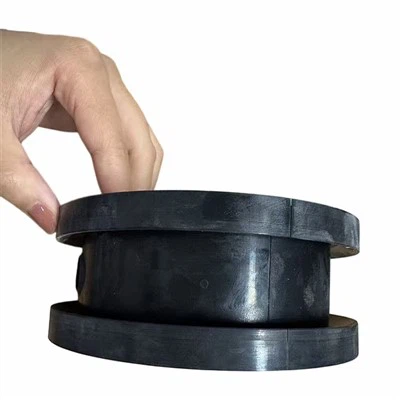
If you’re dealing with O Rings and tired of dealing with parts that leak, wear out too fast, or just don’t fit your needs, hit us up. We don’t do one-size-fits-all here—we’ll talk through your application, tell you exactly what Ra you need, and get you the right NBR O Rings with the perfect surface finish. No confusing jargon, no hidden fees, just straight talk and quality seals.
Polyurethane Shock Absorber References:
- Standard Handbook of O-Rings and Seals, 5th Edition, Society of Tribologists and Lubrication Engineers
- NBR (Nitrile Rubber) Material Properties, ASTM International Standard D2000
- Surface Finish Measurement for Elastomeric Seals, Journal of Seal Technology, 2022 Volume 18
Haining Chaoyue Seals Co., Ltd.
As one of the most professional nbr o ring manufacturers and suppliers in China, we offer a wide range of products with superior quality. Please feel free to wholesale high quality nbr o ring made in China here from our factory. Also, custom service is available.
Address: Building 9, 158 Lianhong Road, Yuanhua Town, Jiaxing, Zhejiang, China.
E-mail: chaoyue@cyseals.com
WebSite: https://www.hncyseal.com/
